Search Recipes & Posts:

Saturday, June 7, 2025

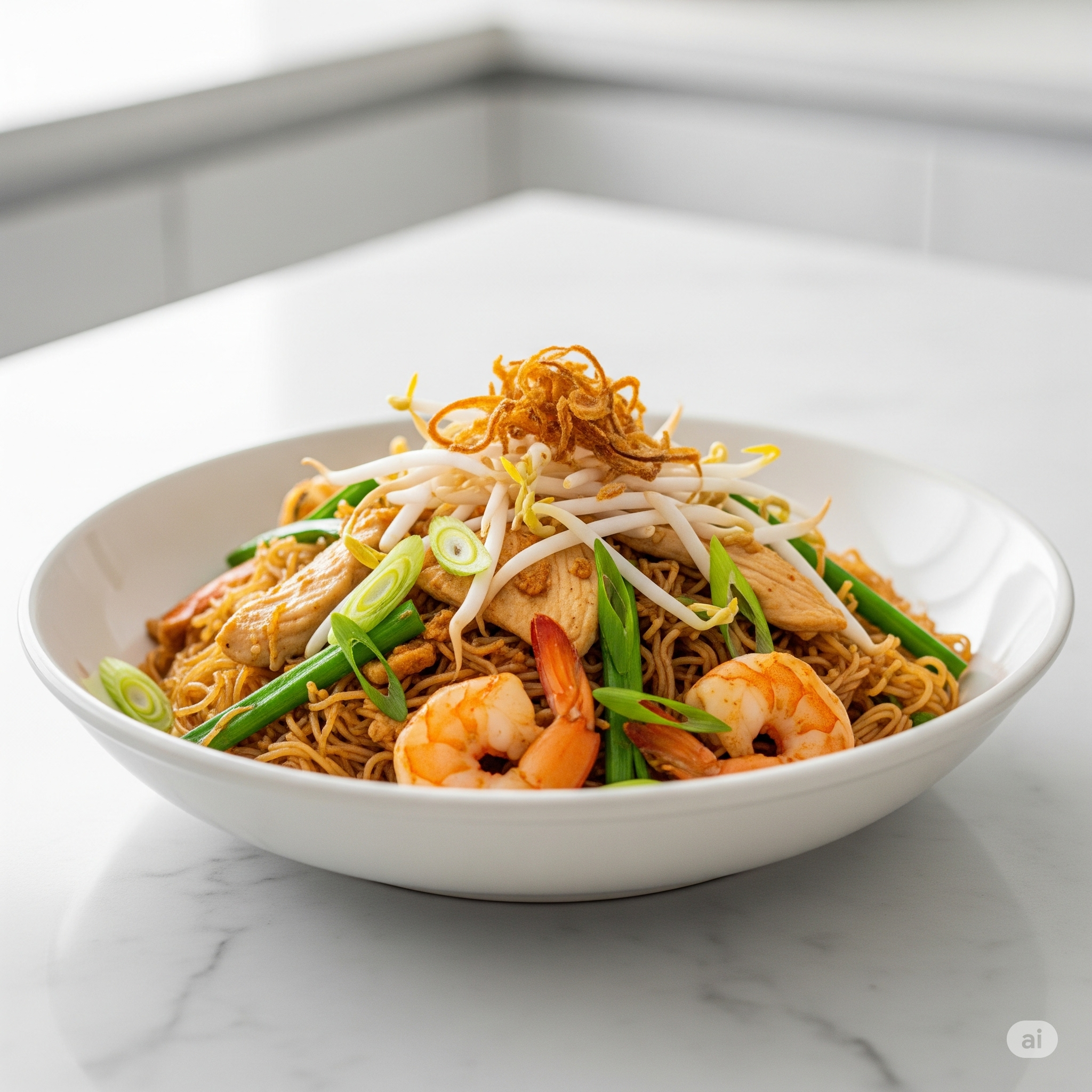
Singaporean Mei Fun Biryani


Imagine the bustling, vibrant energy of a Singaporean hawker stall meeting the regal, aromatic allure of a traditional Indian kitchen. This Singaporean Mei Fun Biryani is precisely that—a culinary masterpiece born from a love of two iconic dishes. It takes the familiar, wok-kissed comfort of curry-infused rice vermicelli and elevates it through the sophisticated, slow-steamed layering technique of biryani. The result is a dish that's both excitingly new and deeply comforting, with each forkful revealing fragrant noodles, tender marinated chicken, plump shrimp, and the satisfying crunch of fresh vegetables. It's a culinary adventure that respects its roots while creating something utterly unique.

A Tale of Two Kitchens

I've always been captivated by the seemingly effortless perfection of Singapore Mei Fun. It's a dish that has to be just right—the noodles perfectly cooked, the curry flavor present but not overpowering, and a delightful mix of textures from shrimp, pork, and crisp vegetables. On the other hand, a great biryani is an event. It's a celebration of spices, with layers of fragrant basmati rice and succulent meat, all slow-cooked to perfection in a sealed pot, a technique known as dum. The idea of combining them felt both audacious and irresistible.

The challenge was clear: how to infuse the delicate, quick-cooking nature of rice vermicelli with the deep, melded flavors of a dum-cooked biryani without turning the noodles to mush? The secret lay in reimagining the process. Instead of cooking the noodles and rice separately, I decided to treat the mei fun noodles as if they were the rice. By creating a rich, flavorful biryani-style masala gravy and layering it with soaked (but uncooked) noodles, fresh herbs, and crispy fried onions, we could use a very short, gentle steaming process. This allows the noodles to absorb all the aromatic steam from the masala below, cooking them perfectly while soaking up the complex flavors of cardamom, cinnamon, cloves, and saffron, all bridged by that signature touch of Madras curry powder.

The experience of making it is a sensory journey. The kitchen fills with the heady aroma of whole spices toasting, followed by the savory sizzle of the masala. The final moment of opening the pot is a true reveal—a cloud of fragrant steam gives way to beautifully cooked, saffron-tinged noodles, jeweled with chicken, shrimp, and herbs. It’s a dish that will impress a seasoned cook with its technique but is surprisingly straightforward for a beginner to master.


The Recipe

Ingredients

For the Noodles & Saffron:

  • 200g thin rice vermicelli noodles
  • 2 tbsp warm milk
  • A generous pinch of saffron threads

For the Marinade (Chicken & Shrimp):

  • 250g boneless, skinless chicken thighs, cut into bite-sized pieces
  • 150g raw shrimp, peeled and deveined
  • 2 tbsp plain yogurt
  • 1 tbsp soy sauce
  • 1 tsp ginger-garlic paste
  • 1 tsp Madras curry powder
  • ½ tsp turmeric powder
  • ½ tsp red chili powder (or to taste)
  • ¼ tsp Chinese five-spice powder
  • Salt to taste

For the Biryani Masala:

  • 2 tbsp ghee or neutral oil
  • 1 large onion, thinly sliced (for frying)
  • Whole Spices: 2 green cardamom pods, 2 cloves, 1-inch cinnamon stick, 1 bay leaf
  • 1 medium onion, finely chopped
  • 1 tbsp ginger-garlic paste
  • 1 medium tomato, pureed
  • 1 red bell pepper, thinly sliced
  • 1 carrot, julienned
  • 1 tsp Madras curry powder
  • ½ tsp ground coriander
  • ¼ tsp ground cumin
  • A handful of fresh mint leaves, chopped
  • A handful of fresh cilantro, chopped

For Layering & Garnish:

  • 1 cup fresh bean sprouts
  • 2 scallions, thinly sliced
  • Extra chopped mint and cilantro
  • Fried onions (prepared from the sliced onion above)

Process

  1. Prepare the Key Components:

    • In a small bowl, add the saffron threads to the warm milk and set aside to bloom.
    • Place the rice vermicelli in a large bowl and cover completely with warm tap water. Let it soak for 15-20 minutes, or until pliable but still firm. Drain thoroughly and set aside. Do not over-soak.
    • In a separate bowl, combine the chicken, shrimp, and all marinade ingredients. Mix well and let it rest for at least 20 minutes.
  2. Fry the Onions (Birista):

    • In a heavy-bottomed pot or Dutch oven (the one you'll use for the biryani), heat the ghee or oil over medium heat.
    • Add the thinly sliced onion and fry, stirring occasionally, until it becomes deep golden brown and crispy. This can take 10-15 minutes. Be patient, as this adds a crucial flavor.
    • Using a slotted spoon, remove the fried onions and set them aside on a paper towel. Leave about 2 tablespoons of the flavored ghee/oil in the pot.
  3. Create the Masala:

    • To the same pot, add the whole spices (cardamom, cloves, cinnamon, bay leaf) and toast for 30 seconds until fragrant.
    • Add the finely chopped onion and sauté until soft and translucent.
    • Stir in the 1 tbsp of ginger-garlic paste and cook for another minute.
    • Add the marinated chicken and shrimp to the pot. Cook for 5-7 minutes, until the chicken is lightly browned and the shrimp just turns pink.
    • Stir in the tomato puree, sliced bell pepper, and julienned carrot. Add the ground spices (curry powder, coriander, cumin) and salt.
    • Cook for 5-7 minutes, until the oil begins to separate from the masala. Stir in the chopped mint and cilantro. You should have a thick, fragrant gravy.
  4. Layer and "Dum" (Steam):

    • Remove the pot from the heat. Spread the masala evenly at the bottom.
    • Create the first layer by scattering half of the soaked and drained rice vermicelli over the masala.
    • Sprinkle over half of the fried onions, half of the remaining fresh mint and cilantro, and half of the saffron milk.
    • Top with the remaining rice vermicelli, creating the final layer.
    • Pour the rest of the saffron milk over the top. Garnish with the remaining fried onions and fresh herbs.
    • Cover the pot with a tight-fitting lid. To create a better seal, you can place a clean kitchen towel between the pot and the lid.
    • Cook on the lowest possible heat setting for 8-10 minutes. This is just to steam the noodles through.
  5. Serve:

    • Turn off the heat and let the pot rest, still covered, for 5 minutes.
    • Open the lid and gently fluff the noodles with a fork, mixing the layers slightly as you serve.
    • Top with a generous amount of fresh bean sprouts and sliced scallions for that signature Mei Fun crunch.

Nutritional Estimate

(This is an approximation and can vary based on specific ingredients used.)

  • Serving Size: 1 serving (Recipe makes approx. 2-3 servings)
  • Calories: 550-650 kcal
  • Protein: 30g
  • Carbohydrates: 65g
  • Fat: 20g
  • Sodium: 900mg

This Singaporean Mei Fun Biryani is more than just a recipe; it's a conversation between two culinary worlds. We hope you enjoy the process of creating and sharing this unique and delicious dish. Happy cooking!

Uttapam on the Silk Road


A Hakka Noodle Revelation

Journey to a culinary crossroads where the comforting, slightly tangy South Indian uttapam meets the savory, umami-rich flavors of Indo-Chinese Hakka noodles. Our Hakka Noodle Uttapam is a dish that speaks to the heart – a harmonious blend of textures and tastes, made even more enticing with a drizzle of fiery Szechuan chili oil and the cooling caress of coconut raita.

From Chennai to China, A Love Story on the Griddle

As someone with a South Indian background, the uttapam holds a special place, its fermented rice and lentil batter providing a soft, slightly sour base for endless flavorful toppings. We're about to embark on a delightful twist, drawing inspiration from the dynamic flavors of Indo-Chinese cuisine, especially the universally loved Hakka noodles.

Our unique take isn't just about topping an uttapam with Hakka noodles. We're creating a true fusion, incorporating the essence of Hakka noodles into the uttapam itself. This means thoughtfully layering the savory, stir-fried noodle dish with its signature soy sauce, ginger, and garlic notes either into the batter for a thoroughly interwoven experience, or as a distinct, tantalizing layer cooked atop the uttapam. This results in a truly exciting textural and flavor interplay unlike any other. The aromatic Szechuan chili oil adds a customizable level of heat and tingling spice while the cooling coconut raita beautifully tempers the spice with its creamy, refreshing touch.

Imagine the sizzle on the griddle as the uttapam cooks, the enticing aroma of fermented batter mingling with ginger, garlic, and soy. The Hakka noodles, stir-fried to chewy perfection, add a delightful bounce to the soft, pillowy uttapam. As you take a bite, the soft tang of the uttapam base gives way to the savory depth of the noodles, followed by a customizable kick from the chili oil, and a soothing, cooling caress from the coconut raita. This isn't just a meal; it's an experience, a journey from South India to China, all on one delicious plate.

Uttapam on the Silk Road: Hakka Noodle Recipe

Yields: 4 servings Prep time: 30 minutes (excluding batter fermentation time) Cook time: 30 minutes

Ingredients:

For the Uttapam Batter:

  • 1 cup rice (ideally parboiled rice)
  • 1/2 cup urad dal (split black gram lentils)
  • 1/4 teaspoon fenugreek seeds
  • Water for soaking and grinding
  • Salt to taste

For the Hakka Noodles:

  • 8 oz dried Hakka noodles (or chow mein noodles, linguine)
  • 2 tablespoons cooking oil
  • 1 teaspoon finely chopped ginger
  • 2 cloves garlic, minced
  • 1/2 cup thinly sliced onion
  • 1/2 cup thinly sliced bell peppers (mixed colors)
  • 1/4 cup shredded cabbage
  • 2 tablespoons light soy sauce
  • 1 tablespoon rice vinegar
  • 1/2 teaspoon sugar
  • 1/4 teaspoon white pepper

For the Szechuan Chili Oil:

  • High-quality store-bought Szechuan chili oil, or
  • (Homemade - see notes below)

For the Coconut Raita:

  • 1 cup plain yogurt (full-fat or Greek yogurt)
  • 1/2 cup grated fresh or desiccated unsweetened coconut
  • 2 tablespoons chopped cilantro
  • 1 green chili, finely chopped (optional)
  • 1/4 teaspoon roasted cumin powder
  • Salt to taste

Optional additions/variations:

  • Grated carrots, thinly sliced scallions (for the Hakka noodles)
  • Sesame oil (for the Hakka noodles)
  • Chopped peanuts or cashews (for garnish)

Process/Steps:

1. Prepare the Uttapam Batter (requires advance preparation):

  • Rinse the rice, urad dal, and fenugreek seeds together in a bowl.
  • Soak them in enough water to cover them completely for at least 4-6 hours, or preferably overnight.
  • Drain the soaked ingredients.
  • In a blender or grinder, grind the soaked ingredients with just enough water to form a smooth, thick batter. The batter should be thicker than pancake batter but pourable.
  • Add salt to taste.
  • Cover the batter and let it ferment in a warm place for 8-12 hours, or until it has doubled in volume and has a slightly sour aroma.

2. Cook the Hakka Noodles:

  • Cook the noodles according to package directions. Drain and rinse with cold water to prevent sticking. Set aside.
  • Heat 2 tablespoons of oil in a wok or large skillet over medium-high heat.
  • Add the ginger and garlic. Sauté for about 30 seconds until fragrant.
  • Add the onion and bell peppers. Stir-fry for 2-3 minutes until slightly softened.
  • Add the shredded cabbage. Stir-fry for another minute.
  • Add the cooked noodles, soy sauce, rice vinegar, sugar, and white pepper. Toss well to combine. Cook for 1-2 minutes, stirring constantly. Taste and adjust seasoning. Keep warm.

3a. Option 1: Hakka Noodles Stirred into the Uttapam Batter:

  • Gently fold about half of the prepared Hakka noodles into the fermented uttapam batter.

3b. Option 2: Hakka Noodles Layered on Top:

  • Keep the prepared Hakka noodles separate.

4. Cook the Uttapam:

  • Heat a lightly oiled griddle or non-stick pan over medium heat.
  • Pour a ladleful of the uttapam batter (either plain, or with the noodles mixed in - depending on which option you choose) onto the hot griddle and spread it gently into a circle, about 4-5 inches in diameter.
  • If you are using option 2, spread a generous portion of the cooked Hakka noodles over the top of the uttapam on the griddle.
  • Cook for 2-3 minutes per side, or until golden brown and cooked through.
  • If desired, drizzle a little more oil around the edges while cooking.

5. Prepare the Coconut Raita:

  • In a bowl, combine the yogurt, grated coconut, chopped cilantro, green chili (if using), roasted cumin powder, and salt. Mix well.

6. Serve:

  • Serve the hot uttapams drizzled generously with Szechuan chili oil and a side of cooling coconut raita.
  • Garnish with chopped peanuts or cashews if desired.

Notes on Homemade Szechuan Chili Oil (Optional):

  • You'll need about 1 cup of neutral oil (e.g., canola, vegetable).
  • In a heatproof bowl, combine 2-3 tablespoons of Szechuan peppercorns and 4-6 dried red chilies (broken into pieces).
  • Heat the oil in a saucepan until it shimmers.
  • Carefully pour the hot oil over the spices. The spices will sizzle.
  • Let it steep for at least 30 minutes, or longer for a more intense flavor.
  • Strain the oil, discarding the solids. (You can also add other aromatics to the oil, such as garlic, ginger, star anise).

Nutritional Estimate (per serving, approximate):

  • Calories: 500-600
  • Protein: 15-20g
  • Fat: 20-30g
  • Carbohydrates: 60-70g

(Disclaimer: This is a rough estimate. Actual nutritional values may vary based on specific ingredients and quantities used.)

Wednesday, June 4, 2025

Samyang Buldak Spicy Beef Teriyaki


A fiery twist on a classic! Tender beef strips marinated in a homemade teriyaki sauce with a bold kick from Buldak sauce. Sweet, savory, and explosively spicy!

Monthly Recipes & Posts: